MISSION
ACHIEVE YOUR MUSIC GOALS
Production problems are often composition problems.
BAEM mentorship develops the thinking behind the music.
Understand why a track isn’t working and what to do about it.
Producing every day is key to reaching your goals.
Weekly mentorship makes it happen.
“Very confronting. A reckoning.”
Charlotte de Witte, DJ Mag No. 1 Techno DJ
DEVELOP YOUR CREATIVE PROCESS
- Clarify your personal sound
- Understand music fundamentals
- Translate ideas into music
IMPROVE YOUR WORKFLOW
- Finish tracks and albums
- Identify the next steps
- Use time efficiently
ENJOY THE RESULTS
- See people react to your music
- Release records and work with labels
- Connect with peers in a scene
MENTORSHIP PROCESS
Mentorship consists of weekly sessions and ongoing contact. Sessions are held online via Zoom and Listento. Semesters last three months each. Your commitment to daily work is an essential part of the process.
APPLICATION PROCESS
If you would like to apply for mentorship, send an email to info at baem dot studio with the subject line “Music goals”. Write about your music background and your music goals. Make sure to include a link to your latest work. A full track, a work-in-progress or even just a loop is fine. You will receive a reply within a week. If you are committed and passionate, you can get where you want to be.
“Boutique mentorship rather than following a strict course.“
Karlo, on why he chose BAEM
Theory
BAEM mentoring gives students clarity about what they are trying to do and how to do it.
Music production techniques — sound design, drum and pattern programming, arrangement, mixdown and mastering — are fundamentally intertwined. For example, what may appear to be a mixdown problem is in reality a sound design issue.
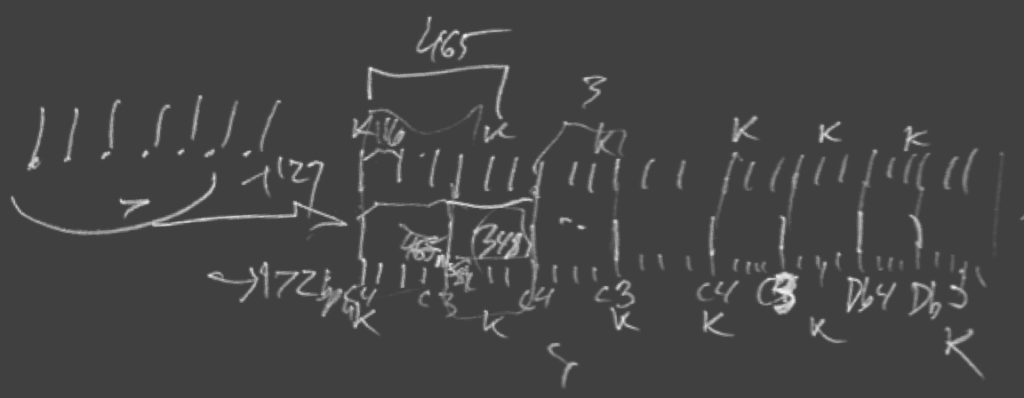
The five basic parameters of music composition — harmony, melody, rhythm, timbre and form — require different lengths of time to be perceived, from milliseconds to minutes. The short ones are exciting and easy to grasp, but the longer ones give your audience the deep payoff.
Everything about music production, from drum transients to a release tracklist, should stem from a personal artistic vision.
“The composition and mixdown tools really feel like developing superpowers. I’ve levelled up significantly and irreversibly.”
Ant, midpoint reflection
Practice
Sessions focus on the practical essence of each topic:
- eliminating mental blocks to productivity
- temporal and spectral ear training
- defining a concept and shaping musical style
- balancing repetition and variation
- developing expressive sound design
- choosing hardware and software tools
- refining mixdown and mastering techniques
“Nicolas has provided me with a musical toolkit that perfectly compliments my university education. He’s compelled me to re-examine every aspect of my approach to electronic music composition.”
Martin Rowe, Private Agenda & BMus Tonmeister (Surrey University)
Staff
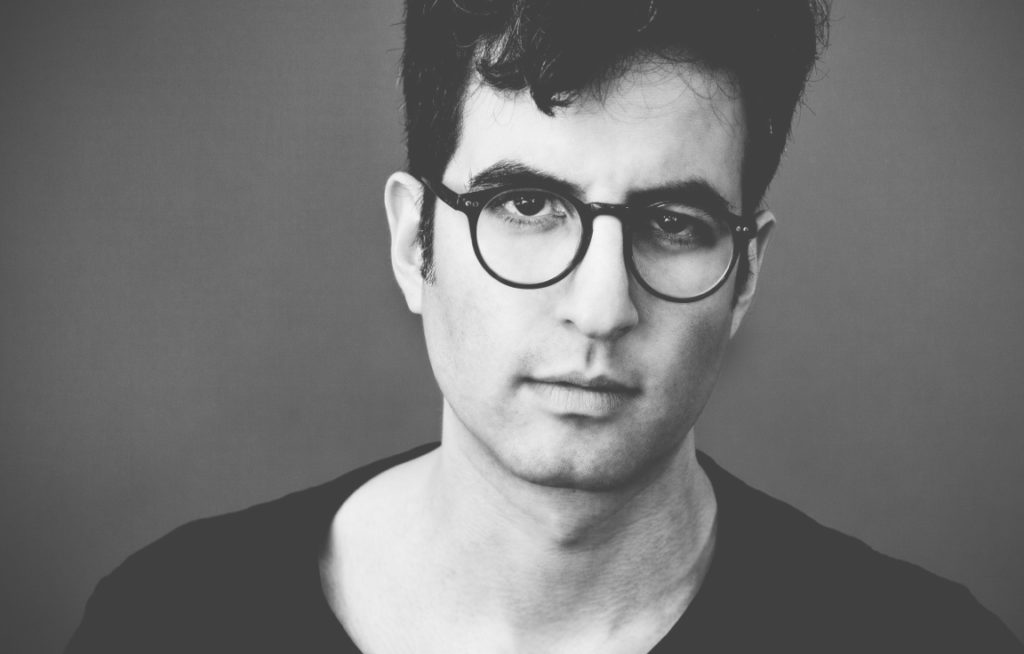
Dr Nicolas Bougaïeff is a Canadian-born, Berlin-based artist and researcher whose work bridges electronic dance music practice and musicological inquiry. He holds a PhD from the University of Huddersfield, where he was also a Marie Skłodowska-Curie Research Fellow.
His artistic output includes releases on Mute and NovaMute, notably the EP Cognitive Resonance (2017) and the album The Upward Spiral (2020). He has performed at Berghain, fabric, and MUTEK. His current practice centres on polytemporality — the systematic use of tempo modulation, polyrhythmic structures, and tuplets within electronic dance music. He developed Pivot Mixing, a technique that challenges the traditional understandings of temporality in electronic dance music. He is a contributing author to The Cambridge Companion to Electronic Dance Music (Cambridge University Press, 2026).
Earlier work includes co-founding Liine with Richie Hawtin and designing the controllers for Plastikman Live. The Lemur app he helped develop was used aboard the International Space Station.
Notable BAEM students include Charlotte de Witte, whom he mentored throughout the production of her debut album.
“His compositional and production skills are extraordinarily highly developed, and his development of new electronic music curriculum is very timely. Students loved working with him, and the mixture he has of the kudos of a well connected signed artist, and a highly trained and qualified musician, is the perfect background for his expanding work as a tutor and lecturer. I can recommend his classes very highly and unreservedly.”
Prof. Rupert Till PhD FHEA CMgr MCMI (University of Huddersfield)